Overview
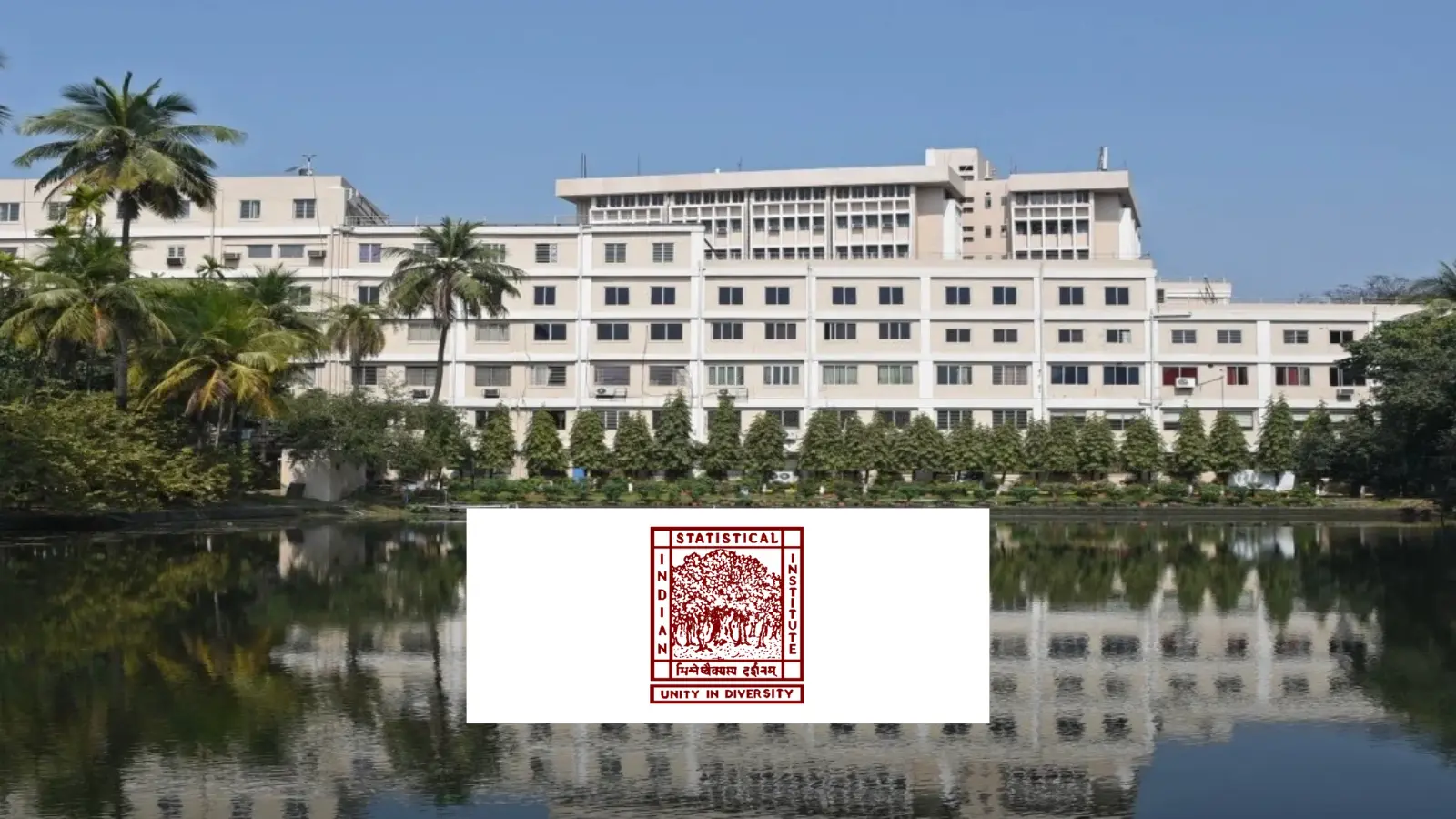
The Indian Statistical Institute was founded by Professor P.C. Mahalanobis in Kolkata on 17th December, 1931. The institute gained the status of an Institution of National Importance by an act of the Indian Parliament in 1959.
Under Mahalanobis’s leadership as the first Director, ISI became a center of excellence in statistical research and education, encouraging the use of statistical methodologies in fields such as agriculture, demographics, economics, and the natural sciences.
History & Founding
Professor Prasanta Chandra Mahalanobis initially set up a Statistical Laboratory at Presidency College, Kolkata in the 1920s. Over time, this evolved into the Indian Statistical Institute, formally established on 17 December 1931. During its early years, Mahalanobis himself led much of the statistical work in India, producing pioneering studies on diverse data sets including meteorological and socio-economic surveys. These studies contributed to flood control, agricultural planning, and the recognition of statistics as a foundational scientific discipline.
Campuses & Centres
ISI is a multi-locational institute with centres across India:
- Kolkata (Headquarters): The original campus where the institute’s primary teaching and research activities are based.
- Delhi Centre: Established in 1974 and housed in its current campus from 1975 onward, the Delhi Centre has a strong tradition of teaching and research in statistics, economics, and allied areas.
- Bengaluru Centre: Conceived in the 1960s and formalized later, this centre offers programmes in mathematics, statistics, quality systems, and information sciences.
- Chennai Centre: The Chennai Centre is actively involved in research in areas of Statistics, Game Theory, Graph Theory, Logic, Cryptography and Mathematics.
- North-East Centre (Tezpur): Inaugurated on July 23, 2011 by Shri Pranab Mukherjee, this centre offers PG Diploma in Statistical Methods and Analytics.
- Additional offices in Hyderabad, Mumbai, Pune, Coimbatore, Vadodara, and Giridih for consultancy and extension work in Statistical Quality Control and Operations Research.
UG Academic Offerings
| Programme Name (Hons.) | Duration | Location |
| Bachelor of Statistics Bachelor of Statistical Data Science | 3 years 4 years | Kolkata |
| Bachelor of Mathematics Bachelor of Statistical Data Science | 3 years 4 years | Bengaluru |
| Bachelor of Statistical Data Science | 4 years | Delhi |
Additionally, ISI offers a broad suite of academic programmes spanning postgraduate, doctoral, diploma, and certificate levels in other campuses as well.
Eligibility and Method of Selection
For Bachelor of Statistical Data Science (BSDS)
- Candidates must have successfully completed 10 + 2 years of higher secondary education or equivalent with Mathematics/Applied Mathematics and English as compulsory subjects.
- Applicants must meet the minimum aggregate marks requirement (75% or 65% for SC, ST and PwD candidates)
- Admission to the BSDS programme is based on valid scores in one of the following exams:
- JEE Main
- CUET (UG) with Mathematics and English papers.
For Bachelor of Statistics (B.Stat Hons) and Bachelor of Mathematics (B.Math Hons.)
- Candidates must have completed 10 + 2 years of higher secondary education (or equivalent) with Mathematics and English as compulsory subjects.
- Admission is based on performance in the ISI Admission Test, a competitive entrance examination conducted by the institute.
- The Admission Test for ISI will be held on 10 May, 2026.
- Sample test papers and past questions are available for reference and preparation.
Conclusion
From its founding by Professor Mahalanobis, who encouraged interdisciplinary collaboration and advanced the use of statistical methods in diverse fields such as agriculture, economics, anthropology, and demography, ISI has shaped both academic inquiry and practical problem-solving.
If you are a prospective student aiming to pursue undergraduate studies in statistics, maths or data sciences, now is a great time to explore the programmes and opportunities ISI offers.