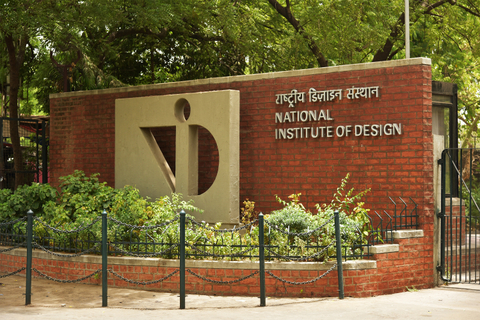
If you enjoy drawing, building things, making videos, experimenting with materials, solving everyday problems or thinking about why products, spaces and visual communication work the way they do, you may have wondered whether design could become a career. The National Institute of Design (NID) is one of India’s best-known institutions for design education, but studying there is not simply about learning to “draw well” or becoming a graphic designer.
What can you study at NID?
NID has three campuses: Ahmedabad, Gandhinagar and Bengaluru. For an undergraduate student, however, the important distinction is that the four-year Bachelor of Design (B.Des.) is offered only at NID Ahmedabad. The Gandhinagar and Bengaluru campuses currently offer postgraduate programmes.
NID Ahmedabad’s B.Des. spans 8 specialisations, grouped into 3 areas: 1) Communication Design, 2) Industrial Design, and 3) Textile, Apparel, Lifestyle & Accessory Design
| If you are interested in… | You could explore… |
| Films, animation and visual storytelling | Film and Video Communication, Animation Film Design |
| Exhibitions, museums and physical experiences | Exhibition Design |
| Visual communication, branding, typography and image-making | Graphic Design |
| Products, objects and how people use them | Product Design |
| Spaces, furniture and human-scale environments | Furniture and Interior Design |
| Materials, craft, glass and ceramics | Ceramic & Glass Design |
| Fabrics, textiles and material exploration | Textile Design |
The breadth is important. At NID, “design” can mean creating a product, communicating an idea, shaping an exhibition, working with materials, telling a story through film or animation, or thinking about how people experience a space.
You don’t have to know your specialisation on Day One
At Ahmedabad, students entering the B.Des. programme begin with a Foundation Programme before moving into a specialised discipline. The Foundation is designed to give students exposure to different ways of thinking, making and exploring design before they specialise.
This gives you some time to ask questions such as:
- Do I enjoy working with physical materials?
- Do I prefer digital or visual communication?
- Am I interested in how people interact with products and spaces?
- Do I enjoy storytelling?
- Do I like researching a problem before designing a solution?
- Do I enjoy making things, or mainly imagining them?
- Am I comfortable experimenting, failing and starting again?
NID’s curriculum objectives emphasise experiential and exploratory learning, creative and analytical thinking, technical skills, problem-solving and the ability to understand design in its social, cultural and technological context.
What kind of student is likely to enjoy NID?
A future designer does not have to fit the stereotype of an “artistic” student. You might enjoy NID if you:
- constantly redesign things in your head;
- notice why a website, app or product is difficult to use;
- enjoy photography, filmmaking or animation;
- like making things with your hands;
- are fascinated by materials, textiles or craft;
- enjoy solving open-ended problems;
- like observing how people behave;
- are interested in technology as well as people;
- enjoy visual communication and storytelling.
At the same time, liking art is not the same thing as liking design.
Design usually requires you to work within a problem, understand a user or context, make choices, respond to constraints and explain your decisions. You may start with a creative idea, but you also have to ask whether that idea actually works.
What does NID’s Design Aptitude Test look for?
Admission to NID’s B.Des. programme is through the Design Aptitude Test (DAT), which has two stages. The test is intended to assess candidates’ knowledge, skills and behavioural qualities.
For a school student preparing for NID, this means developing more than drawing skills. You need to learn to observe, interpret, imagine and communicate.
Start paying attention to the world around you. Why is a particular road sign confusing? How could a school timetable be redesigned? What makes a public space easy or difficult to navigate? How would you explain a complex idea to a child? Could the packaging of a product be made easier to use?
For the 2027–28 admission cycle, the official NID admissions portal lists 30 November 2026, 11:59 pm IST as the deadline for applications to the B.Des./5.5-year Professional Education M.Des. (Integrated Pathway) at NID Ahmedabad, Gandhinagar and Bengaluru.
Why NID?
NID’s appeal is not simply its name or the range of disciplines it offers. It is the opportunity to spend several years learning how to look at problems differently.
You can move between thinking and making, explore different materials and media, work on projects, receive feedback and gradually develop your own approach to design. NID’s curriculum also places emphasis on interdisciplinary learning, technical skills, real-life situations and understanding the needs of users, society and industry.
Conclusion
If you are still in school, start by testing whether design itself interests you.
Take apart a product and think about how it could be improved. Redesign a confusing school form. Photograph and document how people use a public space. Try making something from an unfamiliar material. Create a short visual story. Learn basic digital tools. Most importantly, keep a record of your ideas and experiments.
If you find yourself enjoying the process of observing a problem, asking questions, making something, getting it wrong and trying again, design may be worth exploring seriously.