
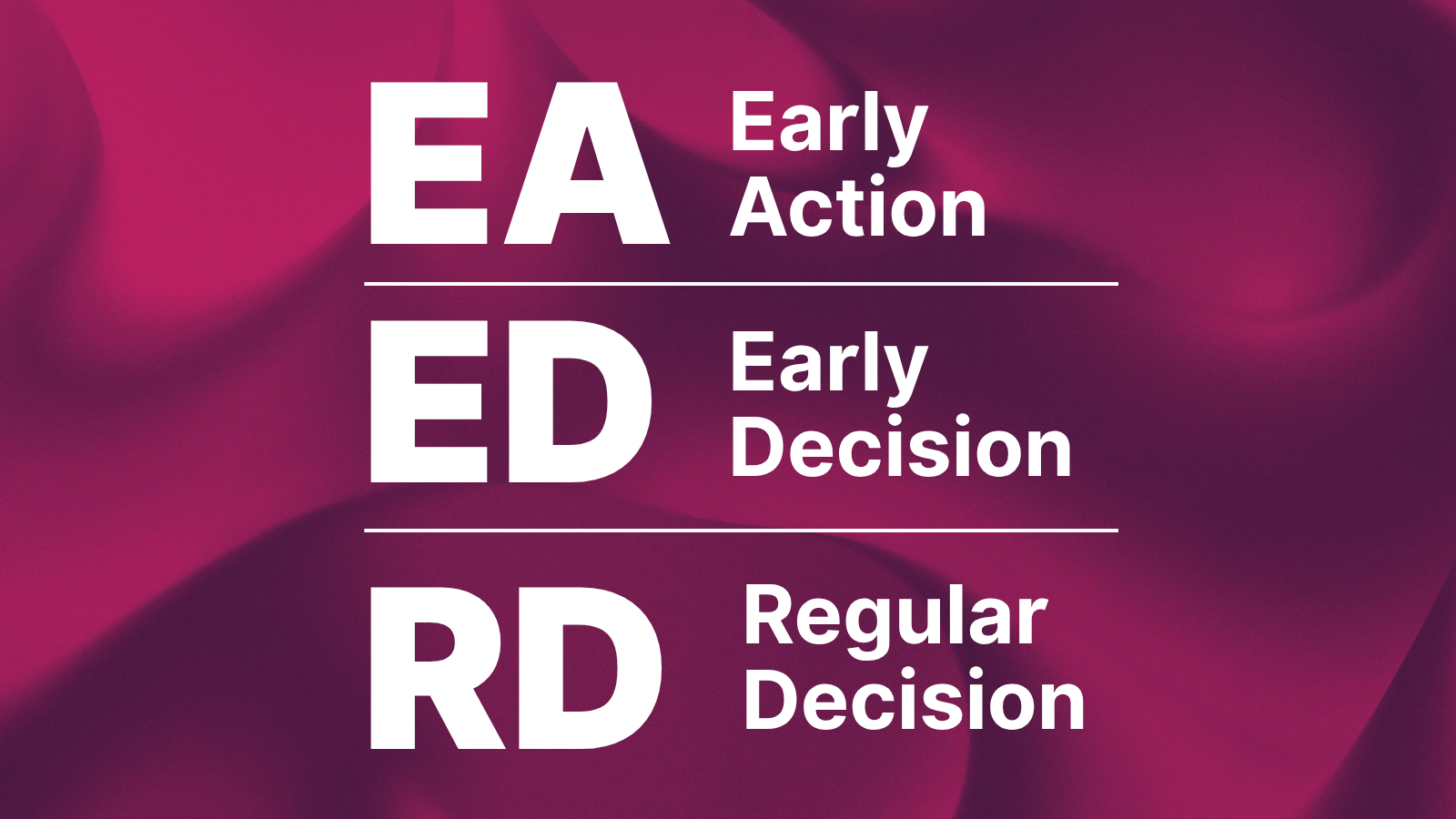
Applying to universities in the US involves more than choosing where to apply. Students also need to decide when and how they want to apply. Most US universities offer one or more application plans, including Early Action (EA), Early Decision (ED), and Regular Decision (RD).
These options differ in important ways. Early Action generally allows students to apply early and receive a decision sooner without committing to attend. Early Decision is a binding option, meaning students agree to attend if admitted, subject to the university’s terms. Regular Decision gives students more time to complete their applications and allows them to compare offers from different universities before making a final choice.
Understanding these differences can help students choose an application strategy that fits their academic profile, preferences, and circumstances.
Early Action vs Early Decision vs Regular Decision: At a Glance
| Feature | Early Action (EA) | Early Decision (ED) | Regular Decision (RD) |
| What is it? | An early application plan that usually allows students to receive a decision earlier without committing to attend | An early application plan that requires students to commit to attending if admitted | The standard application route with a later deadline and decision timeline |
| Is it binding? | No | Yes | No |
| Typical application deadline | Usually around November | Usually around November | Usually between December and February |
| Typical decision timeline | Usually December to February | Usually December to January | Usually March to April |
| Can you apply to other universities? | Generally yes, although some universities have restrictive or single-choice EA policies | Yes, but ED applicants must follow the specific restrictions of their ED agreement | Yes |
| When do you commit? | Usually by May 1 | Soon after admission, according to the ED agreement | Usually by May 1 |
| Best suited for | Students who want an early decision but want to keep their options open | Students who have a clear first-choice university | Students who want more time to complete their applications or compare offers |
| Key consideration | Check whether the university has restrictions on applying elsewhere | The commitment is binding, so students should be certain about their choice | Decisions arrive later, so students wait longer to hear back |
Deadlines and policies vary by university and may change each year. Students should always check the official admissions website of each university they are applying to.
What Is Early Action (EA)?
Early Action (EA) is non-binding. Students can apply early, often around November, and receive a decision earlier than Regular Decision applicants. But if admitted, they do not have to commit right away. They can wait for decisions from other universities, compare their options, and make their final choice later.
Things to Consider
These plans are non-binding, but they limit how else students can apply early. Under Restrictive Early Action (REA) or Single Choice Early Action (SCEA), a student can generally still apply early to public universities and to universities outside the US, as long as those applications are non-binding. However, they usually cannot apply Early Action, Early Decision, or REA/SCEA to any other private university during the same early round. Once the REA/SCEA decision is released , even if the student is deferred, they’re free to apply anywhere, including a binding Early Decision II elsewhere.
What Is Early Decision (ED)?
Early Decision (ED) is binding. This means that if students apply ED to a college and are accepted, they are expected to attend, as long as the financial aid package is workable for their family. One usually applies in November and receives a decision by December.
Early Decision is designed for students who have identified a university as their clear first choice.
Some colleges also offer Early Decision II (ED II). It works exactly like ED, but with a later deadline (usually in early-to-mid January instead of November), and decisions typically come out in February. ED II is popular with students who weren’t admitted to their ED I school, or who finalized their first-choice university too late to make the ED I deadline. It carries the same binding commitment as ED I.
Things to Consider
Because Early Decision is binding, backing out of an offer isn’t simple. If a student declines an ED offer for reasons other than inadequate financial aid, the university can rescind the offer, and in some cases the student’s high school counselor is informed, which can affect their other applications too. This is why families should review a university’s financial aid policies before applying ED, not after.
One more trade-off: because the commitment happens before financial aid offers can be compared, ED only makes sense when a student is genuinely certain about the school. Outcomes vary by university, so it’s worth researching each one’s specific ED policies before deciding.
What Is Regular Decision (RD)?
Regular Decision is the standard application round. It generally has a later deadline than Early Action or Early Decision, giving students additional time to complete their applications. Students typically submit their applications between December and January and receive admission decisions between March and April.
Unlike Early Decision, Regular Decision is non-binding. Students can apply to multiple universities, receive their admission and financial aid offers, and compare their options before deciding where to enrol.
Things to Consider
Students applying through Regular Decision generally have to wait longer for admission decisions. They may also have less time between receiving their decisions and making their final college choice.
What Is Restrictive (REA) or Single-Choice Early Action (SCEA)?
REA or SCEA is non-binding but limited. Students are not required to attend if admitted, but the college may restrict them from applying early to certain other private institutions. The exact rules vary by university, so it’s important to read each college’s policy carefully.
Some universities that offer REA/SCEA are Harvard, Yale, Stanford, Princeton and University of Notre Dame. Make sure you are comfortable committing to that university as your preferred choice, even though admission is non-binding.
Which Application Plan Should You Choose?
There is no single application plan that is right for every student.
- Early Action (EA) may suit students who want an earlier admission decision while keeping the flexibility to compare other offers.
- Early Decision (ED) may be appropriate if you have a clear first-choice university and are comfortable with the binding commitment.
- Regular Decision (RD) may be a better fit if you need more time to prepare your application or want to compare admission and financial aid offers before deciding.
The most important thing is to understand the rules and deadlines of each plan and choose based on your individual circumstances.
Conclusion
Before choosing between Early Action, Early Decision and Regular Decision, check each university’s deadlines and policies, understand whether the plan is binding, and make sure your application is ready to submit.
As a next step, students planning to apply to US universities can create an account on the Common App and start exploring the application. The application cycle for the upcoming year opens on August 1, so setting up an account and familiarising yourself with the platform early can help you stay organised.
Most importantly, understand the financial implications of your choices and select an application plan that aligns with your priorities and readiness.